
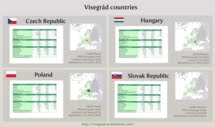
The złoty (sign: zł; code: PLN) is the currency of Poland. The modern złoty is subdivided into 100 groszy (singular: grosz, alternative plural forms: grosze; groszy). Złoty literally means "golden", and it had been the traditional name of Polish currencies in modern times. The current, fifth złoty was introduced in 1995, replacing 10,000 old złotych (PLZ) with one new złoty (PLN). As Poland is a member of the European Union, it is oblidged to change its currency to the euro, but similarly to the Czech Republic and Hungary it is unable to do so.
The złoty is managed by the central bank Narodowy Bank Polski (NBP). You can find its current and historical official interest and exchange rates here. Like the Hungarian central bank, NBP has a sole inflation target, which is at the level of 2.5% with a permissible fluctuation band of +/- 1 percentage point since 2004.
You can read all PLN related articles by clicking here, or clicking the PLN tag on each blog post.
10/26/2009
PLN - The Polish Złoty


3/21/2009
The third meeting of Central and Eastern European central bank governors
On 20 March the Magyar Nemzeti Bank hosted a working meeting of six Central European central bank governors in Budapest. The meeting was the third in the row of regular meetings of governors of central banks of the region following in each case the regular March General Council Meeting of the European System of Central Banks. The governors of Banka Slovenije, Česká národní banka, Magyar Nemzeti Bank, Narodowy Bank Polski, Národná Banka Slovenska and Oesterreichische Nationalbank. The participants discussed the impact of the financial crisis on the Central European economies and the various policy responses of the participating countries. As Austrian-owned banks have been the main creditors of the region, who have provided cheap euro-credit that had crowded out HUF, PLN and CZK loans, there must have been a lot of common headaches. (Slovakia and Slovenia had introduced the euro earlier).

 Bejegyzések


